
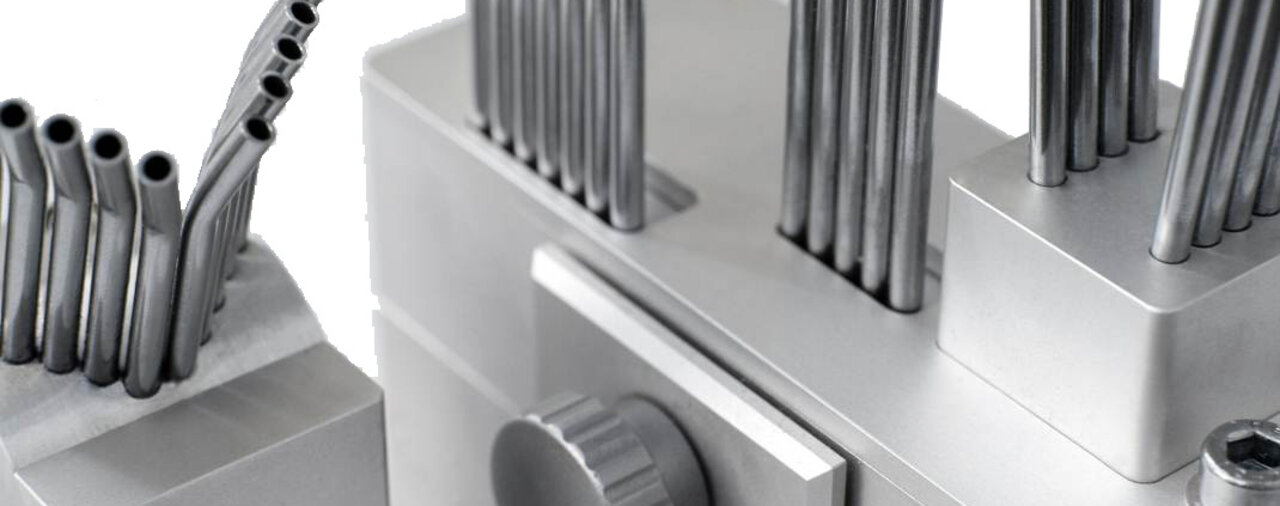
The cooling lubricant supply
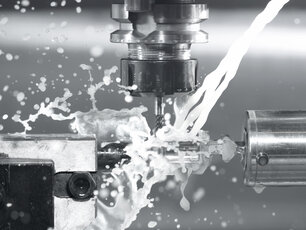
Cooling lubricants contribute significantly to the high performance level of numerous manufacturing processes. By removing process heat from the workpiece-tool contact point and reducing the heat generated by friction in the machining process, the metal removal rate of the machine tools can be increased, the service life of the tools can be extended and the quality of the workpieces can be improved. The use of cooling lubricants can therefore save costs and achieve better results at the same time.
Tasks of cooling lubricants
The tasks of cooling lubricants can be divided into primary and secondary tasks. As the name suggests, the primary tasks are lubrication and cooling:
The reduction of friction between the tool and the workpiece by forming a stable lubricating film.
Cooling the contact zone and the workpiece surface by absorbing and transporting heat.
Challenges in the application of cooling lubricants
Cooling lubricant supply

It is not the high quantity of cooling lubricant supplied to the machining zone that is decisive, but how much of it actually reaches the machining zone. It is therefore advisable to penetrate the air cushion rotating with the tool in order to reach the machining area with the cooling lubricant jet. The decisive reference value here is the exit speed of the cooling lubricant from the cooling lubricant nozzle. It is determined by the pressure upstream of the cooling lubricant nozzle. This must be adapted to the production process, otherwise thermal damage to the component will occur.
Grinding with cooling lubricant
High temperatures occur in the machining zone during grinding. These can be so high that they can cause thermal damage to both the workpiece and the grinding wheel. The result is a structural change, also known as “grinding burn”, in the workpiece edge zone. This leads to undesirable residual tensile stresses. These induce microcracks in the workpiece edge zone, which can lead to failure (breakage, etc.) when the dynamic load is applied during subsequent component use.
Thermal influences also have a negative effect on the tools. If the grain and bond material is not cooled properly, it is thermally overloaded to such an extent that the grinding tools wear out much faster. Both effects must be avoided. Therefore, a targeted and properly designed cooling lubricant supply is necessary.
Solution approaches
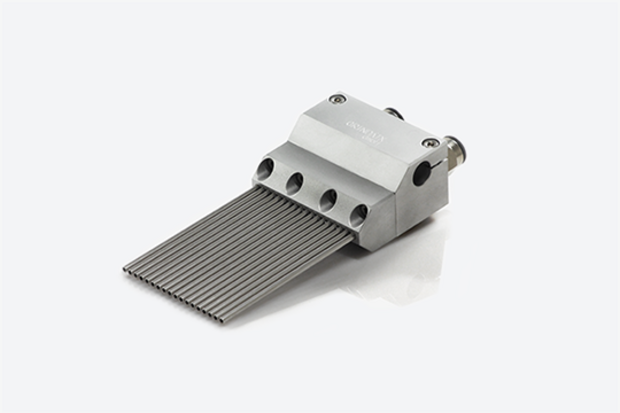
One approach to realizing an optimum cooling lubricant supply is to use cooling lubricant nozzles where the relationship between cooling lubricant outlet speed and cooling lubricant pressure is known. The nozzles can be used to direct a fast jet of cooling lubricant to the machining zone as required.
This requires precise positioning of the nozzle. If the cooling lubricant nozzle misses the machining zone by only a few millimetres, this leads to thermal damage to the tool and component. Therefore, suitable positioning aids (e.g. coolant-metal articulated hoses) are necessary. In addition, suitable measurement technology should be used to monitor the volume flow, pressure and lubricoolant outlet speed in order to adapt them to the requirements of your production process.
Products relevant to this article:
Cooling nozzle
The needle nozzles ensure optimal and precise delivery of coolant and cooling of the machining zone. They are customized to suit the specific machining task at hand.

Coolant Display
The Coolant Display shows the coolant flow rate and volume flow. This helps ensure reproducible results, consistent quality, and prevents grinding burn.
You may also be interested in these articles from our magazine:
Cooling during grinding
The sufficient cooling is an essential part of the production process. This is an interaction that is intended to prevent grinding burn.
Correct cooling
Correct cooling during grinding is important, but challenging. We are specialists in the supply of cooling lubricants and know what is important!

Grinding parts
Grinding uses abrasive grains to shape a wide variety of component materials. It is used to improve the surface of the components.