
Types of metalworking fluid
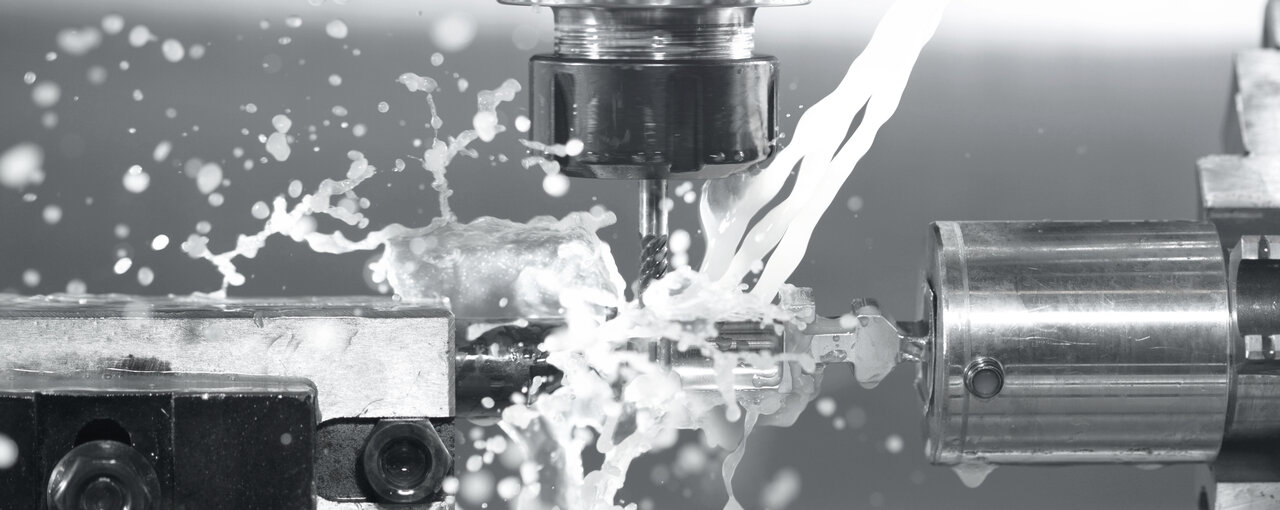
Based on the DIN 51385 standard, metalworking fluids may be subdivided into the main groups of non-water-miscible and water-miscible metalworking fluids, with the water-miscible types being subdivided again into emulsifiable and water-soluble metalworking fluids.
The non-water-miscible metalworking fluids are supplied as ready-to-use products; the water-miscible ones are usually available as a concentrate. Prior to use, the concentrate is diluted with water to form a water-mixed metalworking fluid. Metalworking fluid emulsions are generated from emulsifiable metalworking fluids; metalworking fluid solutions are generated from the water-soluble ones.
Non-water-miscible metalworking fluids
Oils
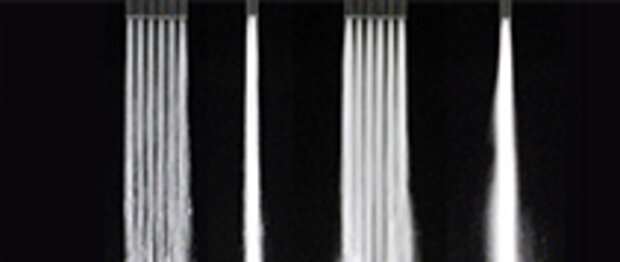
Non-water-miscible metalworking fluids usually consist of mineral oils. However, hydrocracked oils, polyalphaolefins or ester-based oils are additional options. Such metalworking fluids are primarily used when good fluid is at the forefront of considerations. Depending on the intended used and on requirements, additives are mixed with the metalworking fluid to optimize the properties.
Non-water-miscible metalworking fluids have some advantages compared to water-miscible types. Thanks to their generally higher kinematic viscosity, they have a good fluid effect. Besides this, they are characterized by a high pressure susceptibility and good corrosion properties. Another advantage is that with non-water-miscible metalworking fluids no biocides are required for fighting bacteria and fungal attack, as they are virtually germ-free and resistant to bacteria. Their service life is thus considerably longer than that of water-miscible metalworking fluids.
One drawback of non-water-miscible metalworking fluids is that their cooling effect is very slight due to the low specific heat capacity and thermal conductivity compared to water-miscible metalworking fluids. Another problem is posed by oil mist which may be generated when using oils, primarily at high cutting speeds. The aerosols contained within this can lead to health risks in the lungs. Furthermore, oil mist is easily inflammable under certain circumstances, thus rendering adequate safety measures necessary.
Water-miscible metalworking fluids
Emulsions
Emulsions consist of oil, water, emulsifiers and other additives. The task of the emulsifiers is to disperse the oil in the water, so that after mixing with water a stable oil-in-water emulsion is generated.
Due to their good cooling effect and their low procurement price, metalworking fluid emulsions are widespread in industry.
One drawback compared to non-water-miscible metalworking fluids is their bad resistance to microorganisms. Fungal and bacterial attack, etc. impair the corrosion-protection behaviour of the emulsions and the hygienic boundary conditions for the operating personnel diminish considerably. Furthermore, attack by microorganisms causes the emulsion to lose stability, which can lead to operational disruptions.
Solutions
In contrast to emulsions, solutions are free of mineral oils. The concentrate usually consists of polymers or salts. As the concentrate is molecularly dissolved in water, no emulsifiers are required for even distribution of the concentrate. To increase performance, additives may be used in the solutions. Solutions are characterized among other things by their good cooling properties. As no emulsifiers are used, foam problems are less likely to occur during use and the resistance to microorganisms is better than with emulsions.
Drawbacks include the bad lubricating properties of the solutions as well as the tendency of the solutions to wash off lubricants and to have an adhering effect.
Solutions also offer a range of benefits. Would you like to find out more and find your individual solution?
Additives
The properties of metalworking fluids may be changed considerably through the use of additives. The goal is to strengthen the positive properties of the metalworking fluid, minimize the negative properties and thus to generate the desired functional characteristics. Depending on the intended use of the metalworking fluid, the amount and type of additives may be varied. The various types of additives may be roughly subdivided into the following groups according to their function:
- Additives which change the physical properties of the metalworking fluid
- Additives which change the chemical properties of the metalworking fluid
- Tribologically effective additives which change the friction conditions
Metalworking fluids in use
We have made additional items available for the use of metalworking fluids when grinding parts (workpieces): metalworking fluid supply, grinding burn, errors during grinding, grinding wheels, CNC grinding machines, metalworking fluid filtration systems
Products relevant to this article:
Cooling nozzle
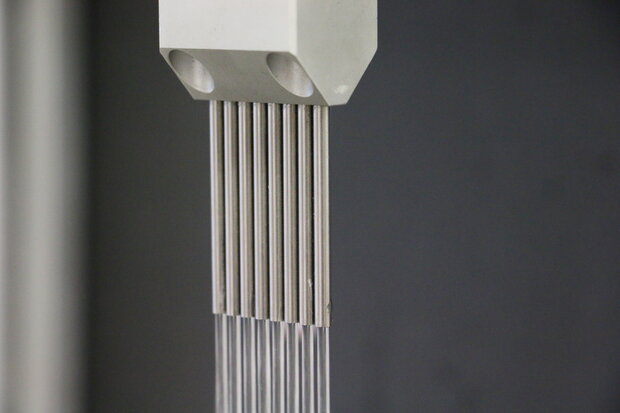
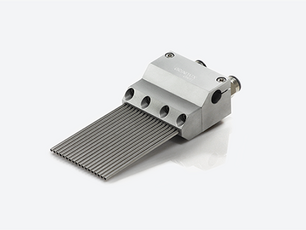
The needle nozzles ensure optimal and precise delivery of coolant and cooling of the machining zone. They are customized to suit the specific machining task at hand.
Coolant Display
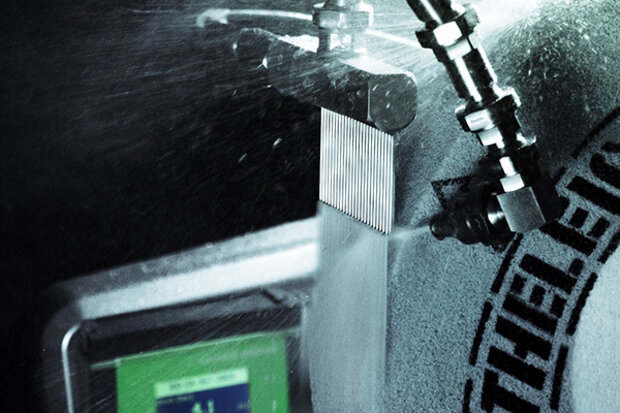
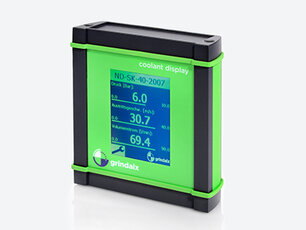
The Coolant Display shows the coolant flow rate and volume flow. This helps ensure reproducible results, consistent quality, and prevents grinding burn.
You may also be interested in these articles from our magazine:
Frequent problems during grinding
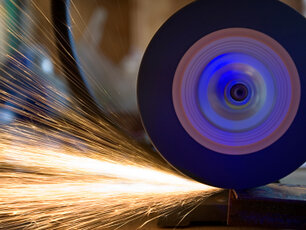
Error reduction during grinding is essential. Sufficient coolant supply and the right setup of the process parameters reduce the source of errors.
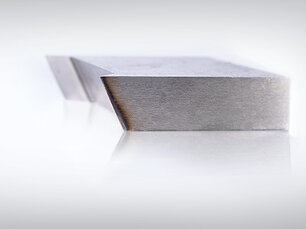
Grinding burn
Grinding burn is thermal damage to the component. Preventing grinding burn is a challenging task and begins with the search for the causes.
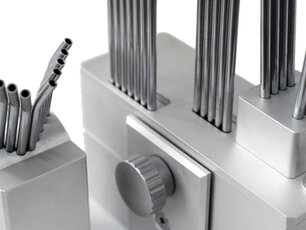
Lubricoolant supply
Cooling lubricant is essential in production for cooling, lubrication or cleaning. As experts, we can advise you on all aspects of coolant supply.
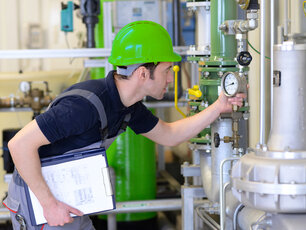
Lubricoolant filtration facilities
Importance of filtration systems based on a comparison of different systems. Reduce your operating costs with optimized filtration.