
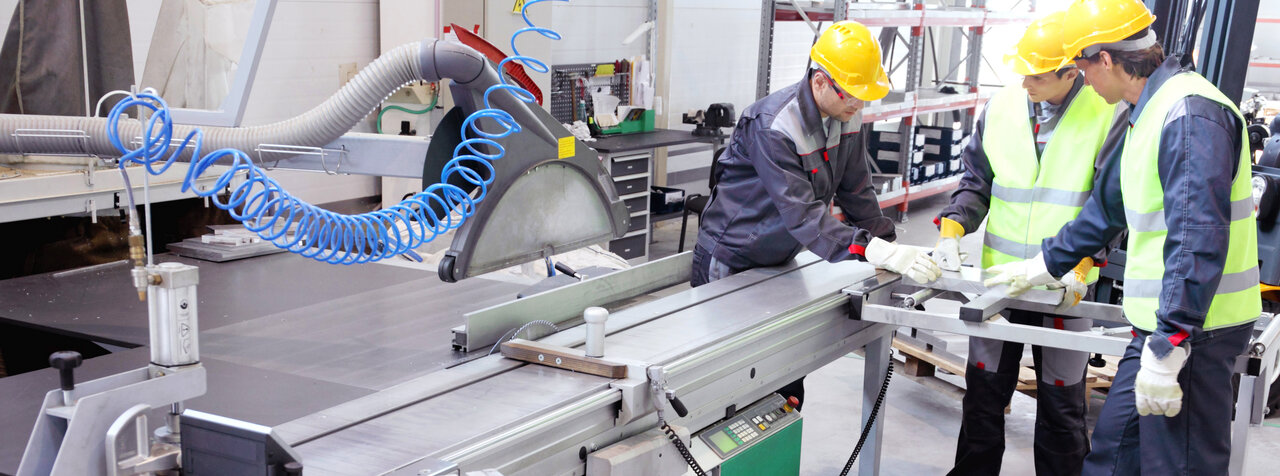
Energy savings during grinding
Since 2022, the issue of saving energy has come to the top of the agenda due to the energy crisis. Companies must critically question their ecological footprint as the pressure from the government has increased. In the Climate Protection Act Section 3 (1), the government has set out that greenhouse gas emissions are to be reduced by at least 65% by 2030. Companies are being held accountable for this. They have been given targets by the government to meet annual emission reduction targets. In addition to the energy sector, transport, buildings and agriculture, industry is also inevitably affected.
As industry accounts for around 25 % of total final energy consumption in Germany, companies must examine whether there are (realistic) opportunities to reduce emissions. In the same way, awareness of the need to save energy is becoming increasingly important in the area of production using machining processes (e.g. grinding processes). Is there potential for savings in grinding in order to reduce energy consumption - without reducing quality and productivity?
The energy consumption of grinding machines
Grinding machines are among the production machines used by many companies in the machining sector. According to the online magazine Blechnet, the metal-cutting machine tools installed in Germany account for 10 to 15 % of total electricity consumption. If this figure is then put into the context of companies, it becomes clear that one machine can even account for up to 60 % of a company's electricity consumption. According to the online magazine Blechnet, the energy consumption during the utilization phase of a machine tool is roughly equal to the 20 % of the costs required for the machine's life cycle. The total consumption of the machine is made up of individual components, such as the pump, the spindle and the coolant supply technology.
The figures given above are rather general and should not be applied to all grinding machines in companies. One thing is important here: individuality. In order for the savings potential of a grinding machine to be discovered and developed, an individual approach is required.
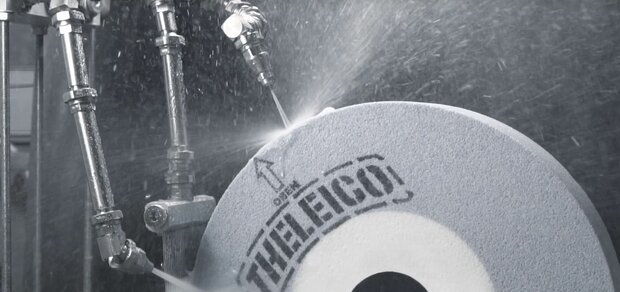
Reduce energy consumption during grinding
If the energy consumption of a grinding machine is found to be too high, it often makes sense to optimize the machine in order to save energy in the future. In all of this, it is important to note that a CO2-optimized design of the grinding process must take into account the function of the produced component in use.

The optimizations must not have a negative impact on productivity and component quality (e.g. surface finish and grinding burn due to an insufficient lubricoolant supply). In addition, the upstream and downstream production steps must also be considered so that the production cycle is not impaired. In order to achieve an improvement in energy efficiency, it is important to perfectly coordinate the machine, workpiece, grinding wheel, dressing tool, dressing spindle and the cooling medium. In particular, the tool life and cycle time of the grinding machines should be adapted and optimized. Above all, the longevity of the machines is the key to resource-saving production.
Another way to reduce energy consumption is to use hydraulic drives for the pump. Here, a constant output pressure is “forced” on the pump while the oil volume remains the same and the pump is only partially set in motion. This means that less energy is required than the pump provides. The performance of the pump is therefore reduced according to function and load.
The energy requirement of a grinding machine essentially depends on the peripheral speed. The peripheral speed in turn depends on other process specifications (grinding wheel, component material, quality requirements, etc.) that are used to manufacture the component. A lot of energy is also required for lubricoolant supply and preparation. The processing of coolant consumes up to 55% of the total energy. In some studies, the researchers came to the conclusion that five to 55% of the total energy consumption during operation is accounted for by the lubricoolant pumps. High-pressure pumps are the main consumers.
By adjusting the lubricoolant flow rate provided by the pump, it is possible to significantly reduce energy consumption. The use of servomotors and regenerative drives can also be a way of reducing the machine's energy consumption. A few companies have already achieved initial success by applying such measures. The energy efficiency of machine tools has been reduced by up to 45%, cutting operating costs by 10% per year. As the range of energy-efficient products, technologies and solutions increases, Blechnet believes that savings of up to 75% of total energy could be possible in the future.
Save energy and resources with KSS nozzles from Grindaix
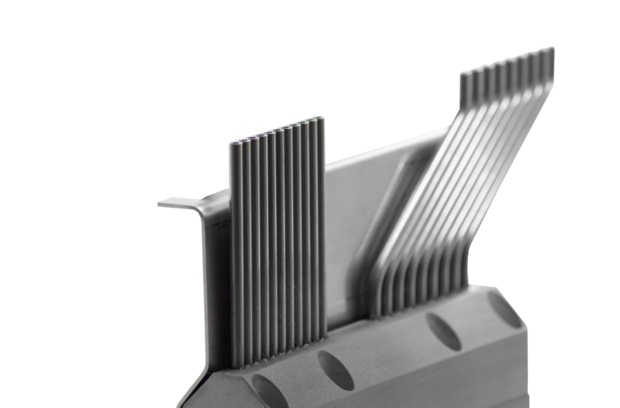
There are many ways to conserve resources during grinding without interrupting or reducing production. One approach here is the needs-based lubricoolant supply. With the Grindaix coolant nozzles specially designed for the customer and the process, the machines are designed for optimum consumption of the coolant supply. This means that they only use as much cooling lubricant as is necessary to achieve the required quality and productivity. By individually adapting the nozzles to the grinding machine and the respective grinding process, the coolant is delivered to the right place. As a result, the machine continues to produce workpieces with a high and often better quality - without consuming vast quantities of cooling lubricant. Thanks to the reduced lubricoolant consumption, both the pumps and the lubricoolant preparation are used less - which generally reduces energy consumption significantly. Our coolant nozzles are designed for the respective grinding process and ensure reliable production while reducing coolant consumption at the same time.
Summary
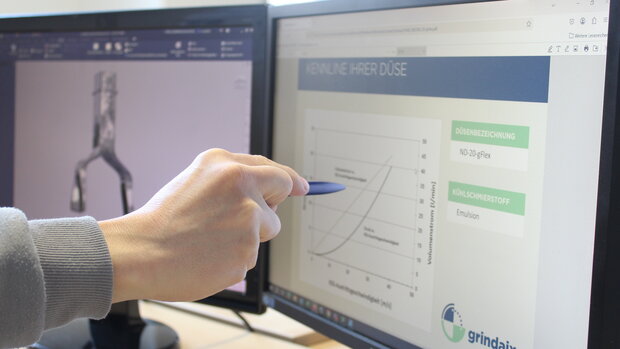
The energy crisis and the government's environmental targets are forcing companies to rethink their energy consumption. Awareness of sustainability has not only come into focus since the energy crisis, but has only been strengthened by it. As the manufacturing industries are an essential part of the German economy, they can no longer avoid dealing with this issue. Solutions must therefore be found, such as a grinding machine that performs its work with the same quality and yet uses less energy. It remains to be seen what new developments/innovations will emerge on the market and to what extent they will change the sanding process.
Almost every grinding process offers potential energy savings: from the setting of the pumps and the process parameters to the lubricoolant supply. In most cases, it makes sense to start with the lubricoolant supply and only look at the pumps afterwards. With the right design, you can significantly reduce energy consumption and increase productivity at the same time. We at Grindaix GmbH will be happy to advise you on the design of your lubricoolant supply.
Are you curious and would like to talk to us? Simply contact us on +49 (0)2273-95373 0 or write an e-mail to info@grindaix.de or send us a message using the contact form. We will be happy to advise you.
Products relevant to this article:
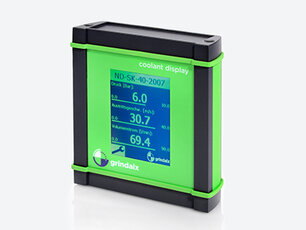
Coolant Display
The Coolant Display shows the coolant flow rate and volume flow. This helps ensure reproducible results, consistent quality, and prevents grinding burn.
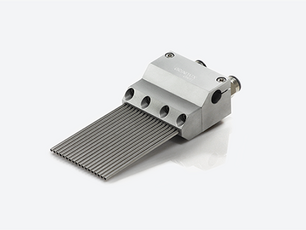
Cooling nozzle
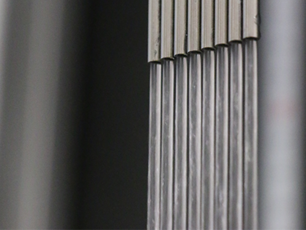
The needle nozzles ensure optimal and precise delivery of coolant and cooling of the machining zone. They are customized to suit the specific machining task at hand.
You may also be interested in these articles from our magazine:
Resource saving coolant supply
Grinding can also be resource-saving. The coolant systems from Grindaix deliver the coolant to the right place - without wasting unnecessary coolant.
Minimum quantity lubrication
The minimum quantity lubrication serves as a lubricant supply, with low cooling lubricant. Here you will find a comparison between MQL and optimized cooling.
Process design and optimization
We provide information on centerless grinding, from circular form deviation to grinding gap geometry. We provide you with all the relevant information.